
Idaho’s New Spring 2026 Forecast Is Here After a Surprisingly Mild Winter
When Boise didn’t get a significant winter storm in November or December, people said “Just you wait, January’s going to be horrible.” When it didn’t come in January? “Man, February’s going to be brutal. The snow’s coming, it’s just going to be late.”
Nope. Boise recorded just one inch of snow in February and it all fell on the same day. Meteorological spring began March 1. Daylight Saving Time begins a week later, giving Idahoans more sunlight to enjoy outdoor activities. While historical data show that the Boise area’s typical last measurable snow falls around March 17, we’re not holding our breath.
READ MORE: If You See This Specific Color on Weather Maps in Idaho, Stay Inside
You’re probably safe to start day dreaming about spring. The National Weather Service certainly is. They’ve released both their seasonal temperature and seasonal precipitation outlooks for March, April and May 2026. Here’s what they say that Idahoans should prepare for.
Idaho’s Seasonal Temperature Outlook for Spring 2026
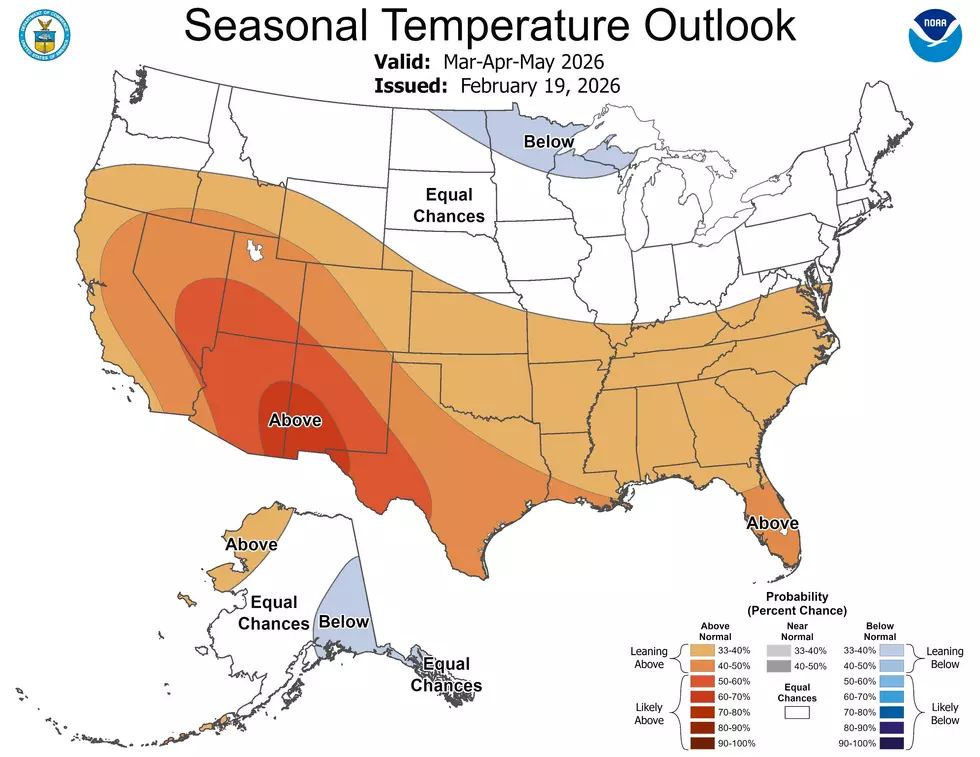
The seasonal temperature shows that Southern Idaho has a good chance of experiencing warmer than normal temperatures over the course of the next three months. That includes the Treasure Valley, Magic Valley, Wood River Valley and major cities in East Idaho.

Up north, it’s anyone’s guess. The map shows that Moscow, Lewiston and Coeur d’Alene have just as good of a chance to experience warmer than normal temperatures as they do cooler temps.
Of course, that information isn’t helpful unless you know what the normal temperatures are for the city you call home in March, April or May. We pulled those for you:
- Boise: 51.6 in March, 62.3 in April, 72.3 in May
- Twin Falls: 47.5 in March, 58.7 in April, 68.7 in May
- Idaho Falls: 41.8 in March, 57.8 in April, 67.2 in May
- Coeur d’Alene: 44.6 in March, 56.2 in April, 65.8 in May
- Lewiston: 51.1 in March, 62.3 in April, 72 in May
Idaho’s Seasonal Precipitation Outlook for Spring 2026

One of the biggest concerns Idahoans have had about the unusually mild winter was how the lack of snowpack will affect the upcoming irrigation season. Toward the end of February, CBS2’s weather team said that Boise and Payette reservoirs were in pretty good shape thanks to the rainy weather the area experienced. However, other areas of the state could really benefit from an unexpected winter storm.
Unfortunately, the National Weather Service’s spring outlook doesn’t show us getting above normal precipitation as we head into the spring months. The entire state has an equal chance of above or below normal precipitation. Here’s what normal precipitation looks like around the state:
- Boise: .08 inches in March, 1.23 inches in April, 1.45 inches in May
- Twin Falls: .05 inches in March, 1.13 inches in April, 1.46 inches in May
- Idaho Falls: .06 inches in March, 1.43 inches in April, 1.93 inches in May
- Coeur d’Alene: .17 inches in March, 1.91 inches in April, 2.14 inches in May
- Lewiston: .07 inches in March, 1.44 inches in April, 1.69 inches in May
If you like spending time outdoors, spring looks promising. But if Idaho’s weather has taught us anything, it’s that “looks promising” isn’t a guarantee. Maybe keep the snow boots somewhere you can still find them…just in case!
KEEP READING: Boise's Summer Weather Extremes
Gallery Credit: Michelle Heart